Reporting & disclosure

    BRSR, ISSB, GRI and the rest: what companies must disclose and how to read it.

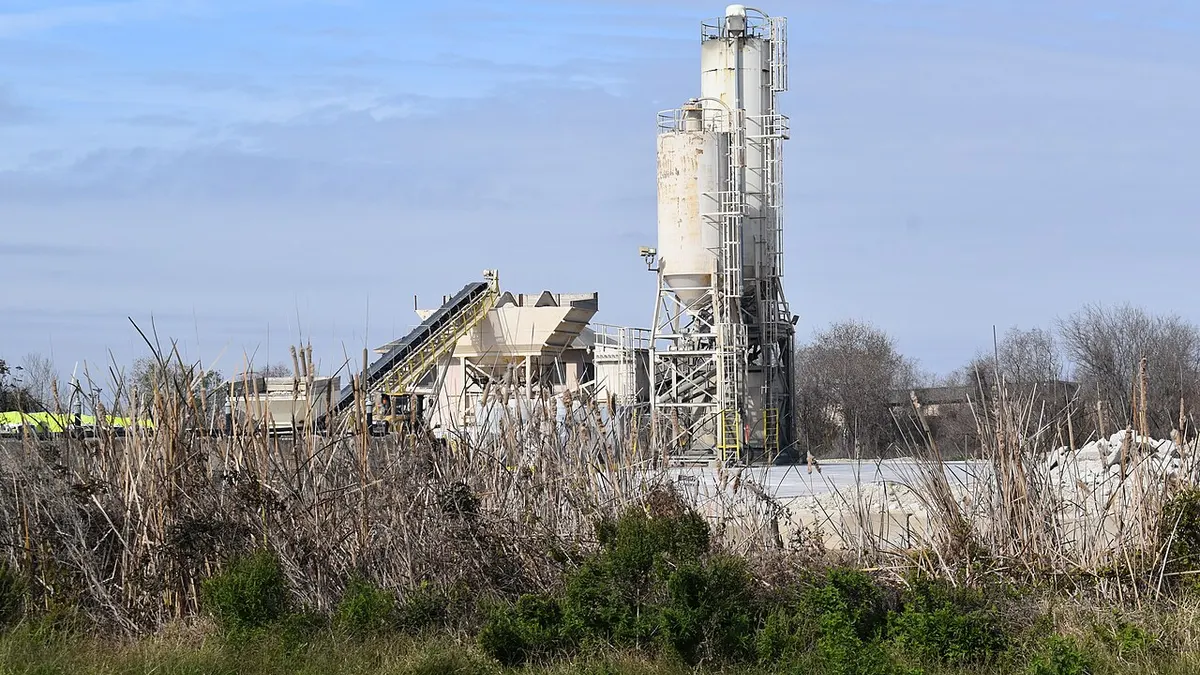
    A cement plant with tall silos behind grassland
    ESG analysis

    A BRSR Walkthrough: Ambuja Cements, FY 2025-26

    A step-by-step reading of a real BRSR: Ambuja Cements' filing for FY 2025-26. What the workforce, safety, energy, emissions, water and related-party data show, the effect of two mergers on the numbers, and the questions an analyst would ask. Educational, not investment advice.

    10 min readRead more
    Concept Guide

    NGRBC: the nine principles behind BRSR

    The National Guidelines on Responsible Business Conduct set out nine principles for Indian businesses. Every BRSR is organised around them. The nine principles, what each one covers, and the indicators companies report under each.

    8 min readRead more
    Concept Guide

    BRSR: a section-by-section guide

    The Business Responsibility and Sustainability Report is India's main ESG filing. Its history, its three sections, what each section asks for, and where the most useful numbers sit.

    10 min readRead more
    Concept Guide

    BRSR Core: the KPIs and assessment or assurance

    BRSR Core is the set of key ESG indicators that large Indian listed companies must have independently checked. The nine attributes, the KPIs under each, the glide path, and the 2025 choice between assessment and assurance.

    9 min readRead more
    Concept Guide

    Value chain disclosures under BRSR

    Many ESG risks sit with a company's suppliers and customers. SEBI's rules on value chain ESG disclosures, how they were eased in 2025, and how to read what companies report.

    7 min readRead more
    Concept Guide

    Reading a BRSR: an analyst's checklist

    A BRSR can run to dozens of pages. A twelve-step checklist for reading one quickly, the cross-checks against the financial statements, and the red flags worth noting.

    9 min readRead more
    Concept Guide

    ISSB: IFRS S1 and IFRS S2

    The ISSB's two standards are becoming the global baseline for sustainability reporting to investors. What IFRS S1 and IFRS S2 require, the December 2025 amendments, adoption around the world, and India's position.

    10 min readRead more
    Concept Guide

    GRI Standards

    The GRI Standards are the most widely used framework for sustainability reporting. How they are organised, the new climate, energy and biodiversity standards, and how GRI fits with ISSB and BRSR.

    8 min readRead more
    Concept Guide

    SASB Standards and industry materiality

    The SASB Standards list the sustainability topics most likely to matter financially in each of 77 industries. How they are built, how analysts use them, and the updates under way at the ISSB.

    8 min readRead more
    Concept Guide

    TCFD and TNFD

    TCFD created the four-pillar structure now used for climate reporting worldwide. TNFD applies the same idea to nature. Their recommendations, the LEAP approach, and how both now feed into ISSB.

    8 min readRead more
    Concept Guide

    The EU rules: CSRD, ESRS, EU Taxonomy and SFDR

    The EU's sustainability rules reach Indian companies through EU subsidiaries, EU customers and EU investors. The CSRD after the 2026 Omnibus cuts, the simplified ESRS, the EU Taxonomy and the proposed SFDR overhaul.

    10 min readRead more
    Concept Guide

    Sustainability assurance: limited vs reasonable

    Assurance makes ESG numbers more reliable, but not all assurance is equal. Limited and reasonable assurance, the standards used in India and abroad, ICAI's new SSA 5000, and how to read an assurance statement.

    8 min readRead more
    Concept Guide

    Climate disclosure for banks and NBFCs (RBI)

    For banks and NBFCs, climate risk sits mainly in the loan book. RBI's path from its 2022 discussion paper to the 2024 draft disclosure framework and the 2025 climate finance Directions, and what analysts can use today.

    8 min readRead more
    Concept Guide

    ESG data: sources, gaps and quality problems

    Every ESG rating, fund and model rests on data. The main sources of ESG data on Indian companies, the common quality problems (boundaries, estimates, lags, restatements, size bias), the global data providers, and a checklist for testing a figure before you use it.

    9 min readRead more
    Lesson

    Read a BRSR extract

    Below is an extract from the BRSR of a hypothetical manufacturing company for FY 2025-26, with FY 2024-25 in brackets. Answer the eight questions using only the extract. Permanent employees: 4,000 (3,800), of whom women 400 (360). Gross wages paid to women as a share of total wages: 6% (6%). LTIFR per million person-hours: employees 0.20 (0.25), workers 1.10 (0.70). Fatalities: employees 0 (0), workers 2 (0). Total energy: 50,00,000 GJ (40,00,000 GJ), of which renewable 5,00,000 GJ (4,00,000 GJ). Company statement: "Green power now meets 30% of our electricity needs." Scope 1 and 2 emissions: 6,00,000 tCO2e (5,00,000 tCO2e). Production: 10,00,000 tonnes (8,00,000 tonnes). Water withdrawal: 20,00,000 KL; water consumption: 20,00,000 KL. Related-party share of purchases: 30% (18%). BRSR Core: limited assurance (reasonable assurance in FY 2024-25), new assurance provider.

    Read more
    Key terms