
Environment & climate

    131 pages carry this tag.

    Analysis

    A cement works lit up at dusk
    ESG analysis

    Comparing Cement Emissions: UltraTech, Ambuja and Dalmia

    Three large Indian cement makers publish emission intensity figures that look comparable but are not. Their latest reported numbers, the differences in units, boundaries, scopes and assurance, and how to compare them properly. Educational, not investment advice.

    8 min readRead more
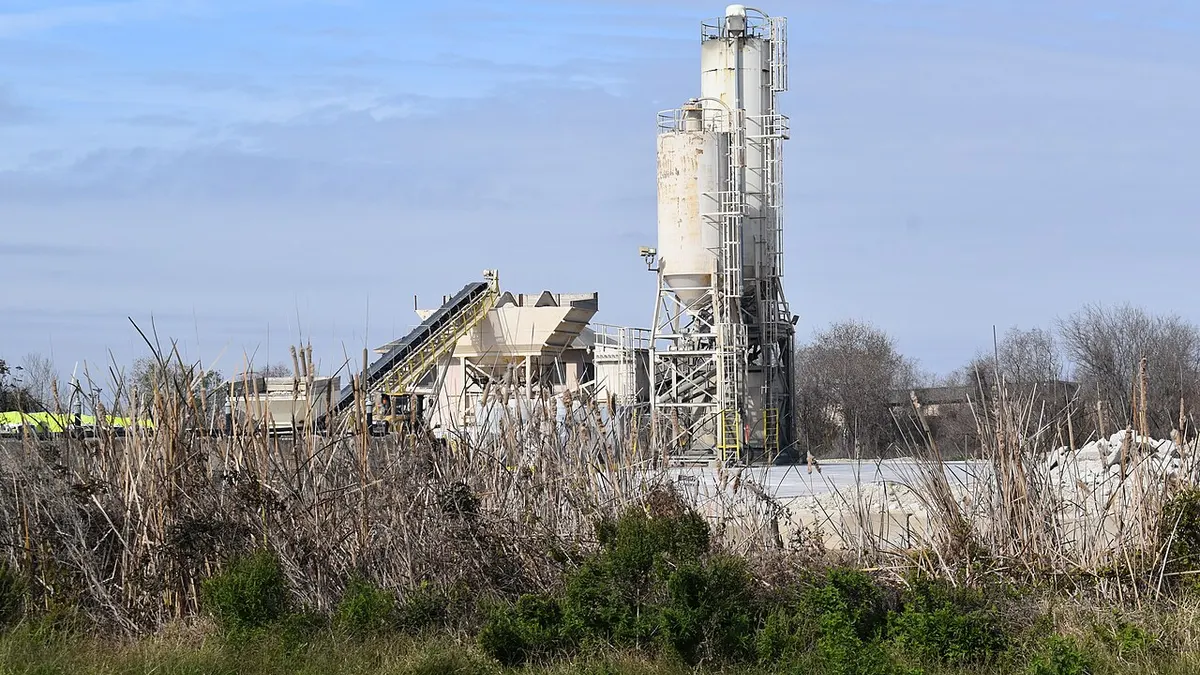
    A cement plant with tall silos behind grassland
    ESG analysis

    A BRSR Walkthrough: Ambuja Cements, FY 2025-26

    A step-by-step reading of a real BRSR: Ambuja Cements' filing for FY 2025-26. What the workforce, safety, energy, emissions, water and related-party data show, the effect of two mergers on the numbers, and the questions an analyst would ask. Educational, not investment advice.

    10 min readRead more

    Concept Guides

    Concept Guide

    GHG accounting: Scopes 1, 2 and 3

    Carbon accounting measures a company's greenhouse gas emissions. The three scopes, the intensity metrics, India's new carbon market, and the traps in reading emissions data.

    10 min readRead more
    Concept Guide

    Scope 3 in practice: the 15 categories

    For many companies, Scope 3 is most of their carbon footprint. The 15 categories, which ones matter in which sectors, how companies estimate them, and how to judge the quality of a Scope 3 figure.

    9 min readRead more
    Concept Guide

    Net zero targets and science-based targets

    Many companies have announced net zero targets. Few are equally credible. How science-based targets work, what changed in the SBTi's 2026 standard, and a checklist for testing any climate target.

    9 min readRead more
    Concept Guide

    Carbon credits and offsets: the quality tests

    A carbon credit is supposed to stand for one tonne of emissions cut or removed. Many do not. The types of credits, the quality tests, the integrity bodies, and India's own offset and Article 6 routes.

    9 min readRead more
    Concept Guide

    India's Carbon Credit Trading Scheme

    India's first compliance carbon market sets binding emission intensity targets for large plants in energy-intensive sectors. How it works, who runs it, which sectors are in, the timeline to the first trades, and how to model it.

    10 min readRead more
    Concept Guide

    The PAT scheme and the shift to CCTS

    Perform, Achieve and Trade was India's market-based energy efficiency scheme for heavy industry from 2012. How it worked, what it achieved, and how it is giving way to the Carbon Credit Trading Scheme.

    7 min readRead more
    Concept Guide

    EU CBAM and Indian exporters

    The EU's Carbon Border Adjustment Mechanism charges importers for the carbon in steel, aluminium, cement, fertilisers, electricity and hydrogen. How it works from 2026, what it costs, and what it means for Indian exporters.

    9 min readRead more
    Concept Guide

    Climate risk and stranded assets

    Climate change creates two kinds of financial risk: physical damage from a changing climate, and the costs of moving to a low-carbon economy. The risk types, stranded asset analysis, and the Indian context.

    9 min readRead more
    Concept Guide

    Climate scenario analysis

    Scenario analysis tests how a company would fare under different climate futures. The main scenario sets (NGFS, IEA, IPCC), a six-step method, and how to judge the quality of a company's scenario disclosures.

    9 min readRead more
    Concept Guide

    Energy disclosure: renewables, RPOs and certificates

    Energy is the largest source of emissions for most companies and a direct cost. How to read energy data, the ways Indian companies buy renewable power, India's renewable consumption obligation, and the coming changes to Scope 2 rules.

    9 min readRead more
    Concept Guide

    Water, waste and extended producer responsibility

    Water shortages can stop production, and India's waste rules now make producers pay for what happens to their products. Water metrics, waste metrics, India's EPR regimes for plastic, e-waste, batteries, tyres, oil and vehicles, and what to look for.

    9 min readRead more
    Concept Guide

    Nature and biodiversity risk

    Businesses depend on nature for water, raw materials and stable land, and many harm it. Dependencies and impacts, the main drivers of nature loss, India's rules, the global frameworks, and how analysts can assess nature risk.

    9 min readRead more
    Concept Guide

    TCFD and TNFD

    TCFD created the four-pillar structure now used for climate reporting worldwide. TNFD applies the same idea to nature. Their recommendations, the LEAP approach, and how both now feed into ISSB.

    8 min readRead more
    Concept Guide

    Transition finance

    Money that helps high-emitting companies cut their emissions, rather than funding activities that are already green. Transition bonds, SEBI's rules, ICMA's 2025 guidelines, Japan's sovereign transition bonds, India's draft taxonomy, and the tests of a credible transition plan.

    9 min readRead more
    Concept Guide

    Climate risk in banks and NBFCs

    How floods, heatwaves and carbon policy reach a lender's balance sheet. Financed emissions and the PCAF standard, RBI's 2022 pilot climate stress test, global rules for banks, and a checklist for analysing an Indian lender.

    9 min readRead more
    Concept Guide

    Carbon pricing in a DCF: a worked, illustrative model

    A step-by-step, made-up cement example that turns an intensity-based carbon scheme like India's CCTS into after-tax cash flows, a present value and a sensitivity table, and then tests whether paying for an emission cut is worth it.

    10 min readRead more
    Concept Guide

    Portfolio carbon metrics: WACI and financed emissions

    The four standard ways to measure a portfolio's carbon exposure, worked through on a three-stock example: financed emissions, carbon footprint, WACI and forward-looking alignment metrics, plus the EU climate benchmarks and the traps in each number.

    9 min readRead more
    Concept Guide

    Sector map: cement

    Cement is one of the most carbon-intensive industries, and India's carbon market now puts a price on it. Emissions intensity, alternative fuels, dust, mining and safety are the key issues. The data to use and the CCTS and CBAM rules to know.

    5 min readRead more
    Concept Guide

    Sector map: steel

    Steel faces carbon pressure from three directions: the EU's border tax, India's coming carbon targets and the new Green Steel Taxonomy. Emissions intensity, safety, water and community issues, the data to use and the rules to know.

    5 min readRead more
    Concept Guide

    Sector map: power

    For power companies, the transition from coal to renewables is the central ESG and business question. Coal dependence, air pollution rules, water, ash and land for renewables, with the data to track and the Indian rules to know.

    5 min readRead more
    Concept Guide

    Sector map: oil and gas

    Most of an oil company's emissions come from customers burning its fuels, which makes transition strategy the core ESG issue. Scope 3, methane, process safety, carbon targets for refineries and policy risk, with the data to track.

    5 min readRead more
    Concept Guide

    Sector map: automobiles

    For carmakers, the biggest emissions come from the vehicles on the road, so fuel efficiency rules and the shift to EVs drive the ESG story. CAFE III, PM E-DRIVE, end-of-life vehicle rules, supply chains and safety, with the data to track.

    5 min readRead more

    Formulas & Ratios

    Formula

    Physical carbon intensity

    This is the best measure for comparing plants and companies in the same industry, and it is the basis of India's CCTS targets and of the EU's CBAM...

    Read more
    Formula

    Scope 3 share of total emissions

    A high Scope 3 share means most of the company's climate exposure sits in its value chain, so targets and analysis that cover only Scope 1 and 2 miss...

    Read more
    Formula

    Renewable energy share

    Separate two figures: the renewable share of total energy, and the renewable share of electricity. Many industrial companies use far more energy as...

    Read more
    Formula

    Energy intensity

    A falling energy intensity usually means better efficiency. The output-based version is more reliable for comparing companies in the same sector,...

    Read more
    Formula

    Water intensity

    Water intensity matters most for water-heavy sectors such as beverages, textiles, power, paper and chemicals. A company-level figure can hide large...

    Read more
    Formula

    Waste recovery rate

    A higher rate means more waste is kept out of landfill and incineration. Read it alongside the total amount of waste and waste intensity: a company can...

    Read more

    Interactive Lessons

    Lesson

    Scope 1, 2 or 3 sorter

    Twelve emission sources at hypothetical Indian companies. Sort each into Scope 1 (direct emissions from sources the company owns or controls), Scope 2 (purchased electricity, steam, heat or cooling) or Scope 3 (everything else in the value chain).

    Read more

    Glossary

    Glossary

    Paris Agreement

    The 2015 international climate treaty that aims to keep warming well below 2°C and to pursue a 1.5°C limit.

    Read more
    Glossary

    COP (Conference of the Parties)

    The yearly meeting of countries that are parties to the UN climate convention, where climate rules and targets are negotiated.

    Read more
    Glossary

    1.5°C goal

    The Paris Agreement aim of limiting global warming to 1.5°C above pre-industrial levels.

    Read more
    Glossary

    Net zero

    A state where the greenhouse gases put into the atmosphere are balanced by the amount removed from it.

    Read more
    Glossary

    Carbon neutral

    A claim that a company's or product's emissions have been fully balanced, usually by buying carbon offsets.

    Read more
    Glossary

    Climate positive

    A claim that a company removes or offsets more greenhouse gases than it emits.

    Read more
    Glossary

    Just transition

    Moving to a low-carbon economy in a way that protects the workers and communities who depend on high-carbon industries.

    Read more
    Glossary

    Kyoto Protocol

    A 1997 climate treaty that set binding emission cuts for developed countries only.

    Read more
    Glossary

    Panchamrit

    The five climate goals India announced at COP26 in Glasgow in 2021.

    Read more
    Glossary

    IFRS S2

    The ISSB standard on climate-related disclosures.

    Read more
    Glossary

    CDP

    A non-profit that runs a global disclosure system on climate, water and forests, and scores companies from A to D-.

    Read more
    Glossary

    ISAE 3410

    The international standard for assurance engagements on greenhouse gas statements.

    Read more
    Glossary

    GHG Protocol

    The most widely used global standards for measuring and reporting greenhouse gas emissions, developed by the World Resources Institute and the World Business Council for Sustainable Development.

    Read more
    Glossary

    Scope 1 emissions

    Direct greenhouse gas emissions from sources a company owns or controls.

    Read more
    Glossary

    Scope 2 emissions

    Indirect emissions from the electricity, steam, heat or cooling a company buys.

    Read more
    Glossary

    Location-based method (Scope 2)

    A way of calculating Scope 2 emissions using the average emission factor of the grid where the electricity is used.

    Read more
    Glossary

    Market-based method (Scope 2)

    A way of calculating Scope 2 emissions using the emission factors of the specific electricity a company has chosen to buy, including certificates and contracts.

    Read more
    Glossary

    Scope 3 emissions

    All other indirect emissions in a company's value chain, from suppliers upstream to customers downstream.

    Read more
    Glossary

    CO2e (carbon dioxide equivalent)

    A common unit that expresses the warming effect of any greenhouse gas as the amount of carbon dioxide with the same effect.

    Read more
    Glossary

    Global warming potential (GWP)

    A measure of how much heat a greenhouse gas traps compared with carbon dioxide over a set period, usually 100 years.

    Read more
    Glossary

    Emission factor

    A number that converts an activity, such as fuel burned or electricity used, into greenhouse gas emissions.

    Read more
    Glossary

    Carbon footprint

    The total greenhouse gas emissions caused by a company, product, activity or person, expressed in CO2e.

    Read more
    Glossary

    Carbon intensity

    Greenhouse gas emissions per unit of revenue or output, used to compare companies of different sizes.

    Read more
    Glossary

    Physical intensity

    Emissions or energy use per unit of physical output, such as tonnes of CO2e per tonne of steel or cement.

    Read more
    Glossary

    Avoided emissions

    Emissions that a product or service helps others avoid, compared with a reference case, such as the emissions saved when a customer replaces a diesel generator with solar power.

    Read more
    Glossary

    Science-based target

    An emissions reduction target consistent with what climate science says is needed to meet the Paris Agreement goals.

    Read more
    Glossary

    Carbon budget

    The total amount of CO2 that can still be emitted while keeping warming below a given level, such as 1.5°C or 2°C.

    Read more
    Glossary

    Internal carbon price

    A price per tonne of emissions that a company uses in its own decisions, even where no external carbon price applies.

    Read more
    Glossary

    Carbon tax

    A tax set at a fixed price per tonne of greenhouse gas emitted, or on the carbon content of fuels.

    Read more
    Glossary

    Cap-and-trade

    An emissions trading system in which the government caps total emissions, issues allowances up to the cap, and lets companies trade them.

    Read more
    Glossary

    Baseline-and-credit

    A trading system that sets a benchmark for each participant and issues credits to those that beat it, which others can buy to cover a shortfall.

    Read more
    Glossary

    Compliance carbon market

    A carbon market created by law, in which covered companies must hold allowances or credits for their emissions.

    Read more
    Glossary

    Voluntary carbon market

    A market in which companies and individuals buy carbon credits by choice, usually to support climate claims.

    Read more
    Glossary

    Carbon credit

    A tradable certificate representing one tonne of CO2e reduced, avoided or removed from the atmosphere.

    Read more
    Glossary

    Carbon offset

    A carbon credit used to compensate for a company's own emissions.

    Read more
    Glossary

    Carbon removal

    Taking CO2 out of the atmosphere and storing it, through nature (such as forests and soils) or technology (such as direct air capture).

    Read more
    Glossary

    Additionality (carbon credits)

    The test of whether an emission reduction would have happened anyway without the money from selling carbon credits.

    Read more
    Glossary

    Permanence

    The test of whether carbon kept out of the atmosphere by a project will stay out over the long term.

    Read more
    Glossary

    Leakage (carbon)

    An increase in emissions elsewhere caused by a project or policy that cuts emissions in one place.

    Read more
    Glossary

    Double counting

    When the same emission reduction is claimed by more than one party, such as two companies or two countries.

    Read more
    Glossary

    Article 6 (Paris Agreement)

    The part of the Paris Agreement that allows countries to cooperate on emission cuts, including by trading carbon credits.

    Read more
    Glossary

    CCTS (Carbon Credit Trading Scheme)

    India's compliance carbon market, which sets binding emission intensity targets for large plants in energy-intensive sectors.

    Read more
    Glossary

    Obligated entity (CCTS)

    A plant or unit that must meet a legally binding greenhouse gas emission intensity target under India's CCTS.

    Read more
    Glossary

    PAT scheme (Perform, Achieve and Trade)

    India's market-based scheme, from 2012, that set energy efficiency targets for large industrial plants and let them trade energy saving certificates.

    Read more
    Glossary

    ESCert (Energy Saving Certificate)

    A tradable certificate under India's PAT scheme, representing one tonne of oil equivalent of energy saved beyond a plant's target.

    Read more
    Glossary

    Green Credit Programme

    An Indian scheme that awards green credits for voluntary environmental actions, such as planting trees on degraded forest land.

    Read more
    Glossary

    Physical risk (climate)

    The risk of financial loss from the physical effects of climate change, such as floods, heatwaves, cyclones and droughts.

    Read more
    Glossary

    Acute physical risk

    Climate risk from sudden extreme events, such as cyclones, floods, heatwaves and wildfires.

    Read more
    Glossary

    Chronic physical risk

    Climate risk from long-term shifts, such as rising average temperatures, sea level rise and changing rainfall.

    Read more
    Glossary

    Transition risk

    The risk of financial loss from the move to a low-carbon economy, through policy, technology, market or reputation changes.

    Read more
    Glossary

    Liability risk (climate)

    The risk that companies face legal claims over their contribution to climate change, or over misleading climate disclosures.

    Read more
    Glossary

    Stranded asset

    An asset that loses value earlier than expected, or must be retired early, because of changes such as climate policy, new technology or falling demand.

    Read more
    Glossary

    Climate scenario

    A consistent description of a possible future path for emissions, policy, technology and warming, used to test climate risk.

    Read more
    Glossary

    NGFS scenarios

    Climate scenarios published by the Network for Greening the Financial System, a group of central banks and supervisors, widely used for financial stress tests.

    Read more
    Glossary

    Energy intensity

    Energy used per unit of revenue or output, a measure of how efficiently a company uses energy.

    Read more
    Glossary

    Water withdrawal

    The total water a company takes in from all sources, such as rivers, groundwater, third-party supply and the sea.

    Read more
    Glossary

    Water consumption

    Water that a company withdraws and does not return, roughly withdrawal minus discharge.

    Read more
    Glossary

    Water stress

    A condition in which demand for water in an area is high compared with the available supply.

    Read more
    Glossary

    Zero liquid discharge (ZLD)

    A water treatment approach in which a plant recycles all its wastewater and discharges no liquid effluent.

    Read more
    Glossary

    Circular economy

    An economic model that keeps products and materials in use for as long as possible through reuse, repair, recycling and better design.

    Read more
    Glossary

    Hazardous waste

    Waste that can harm health or the environment because it is toxic, flammable, corrosive or reactive.

    Read more
    Glossary

    Biodiversity risk

    The risk to a business from the loss of plant and animal species and the ecosystems they form.

    Read more
    Glossary

    Nature-related risk

    Risks to a business that come from its dependencies and impacts on nature, including water, land, oceans and biodiversity.

    Read more
    Glossary

    LEAP approach

    TNFD's four-step method for assessing nature-related issues: Locate, Evaluate, Assess and Prepare.

    Read more
    Glossary

    SOx (sulphur oxides)

    Air pollutants, mainly sulphur dioxide, released when fuels containing sulphur, such as coal and heavy oil, are burned.

    Read more
    Glossary

    NOx (nitrogen oxides)

    Air pollutants formed when fuels are burned at high temperatures, in vehicles, power plants and industrial furnaces.

    Read more
    Glossary

    Particulate matter (PM)

    Tiny particles in the air, such as PM10 and PM2.5, that can enter the lungs and bloodstream.

    Read more
    Glossary

    Global Stocktake

    A review under the Paris Agreement, held every five years, of collective progress towards its climate goals.

    Read more
    Glossary

    Emissions intensity of GDP

    A country's greenhouse gas emissions per unit of economic output, the main form of India's national emissions target.

    Read more
    Glossary

    Non-fossil capacity

    Installed electricity generating capacity from sources other than fossil fuels: renewables, large hydro and nuclear.

    Read more
    Glossary

    Transition bond

    A use-of-proceeds bond that funds projects to cut emissions in high-emitting activities that cannot yet become fully green.

    Read more
    Glossary

    Blue bond

    A green bond whose proceeds go to sustainable water management or the marine and ocean economy.

    Read more
    Glossary

    Financed emissions

    The share of borrowers' and investees' greenhouse gas emissions that is attributed to a bank, insurer or investor that funds them.

    Read more
    Glossary

    Climate stress test

    An exercise that estimates how a bank's or insurer's losses would change under severe physical or transition climate scenarios.

    Read more
    Glossary

    Weighted average carbon intensity (WACI)

    A portfolio's exposure to carbon-intensive companies, calculated as the portfolio-weighted average of each holding's emissions per unit of revenue.

    Read more
    Glossary

    Implied temperature rise (ITR)

    An estimate, in degrees Celsius, of the global warming that would result if the whole economy emitted like a given company or portfolio.

    Read more
    Glossary

    Paris-aligned benchmark (PAB)

    An EU-defined index type whose carbon intensity is at least 50% below its parent index and falls by at least 7% a year, with fossil fuel exclusions.

    Read more
    Glossary

    Climate Action 100+

    An investor-led initiative, launched in 2017, that engages the world's largest corporate greenhouse gas emitters on climate governance, emission cuts and disclosure.

    Read more
    Glossary

    Net Zero Asset Managers (NZAM)

    An initiative of asset managers committed to supporting the goal of net zero emissions, relaunched in February 2026 with a looser commitment.

    Read more

    Related topics: Valuation, DCF, Relative valuation, Cost of capital, Financial statements, Cash flow, Earnings quality, Red flags